This post contains affiliate links. As an Amazon Associate I earn from qualifying purchases, at no extra cost to you. Details.
Curtains change how big a small living room looks more than any other fabric in it. Hung low and narrow, they shrink the window and cut the wall in two. Hung high and wide, they make the same window look larger and the ceiling higher. Most of the ideas below cost nothing extra: they are about where the rod goes and which length you order.
Three numbers to know first
- Rod width. Let the rod pass the window frame by about 8 inches on each side, so open curtains rest on the wall and not on the glass.
- Rod height. At least 4 to 6 inches above the frame, and closer to the ceiling if the panel length allows.
- Fabric width. The panels together should be about twice as wide as the rod. Less than that and they look like flat sheets when closed.
The curtain size calculator turns your window width and height into the rod length, the number of panels and the panel length.
01Hang the rod close to the ceiling
This is the change with the biggest effect. A rod a few inches below the ceiling draws one long vertical line from top to floor, and the wall reads as taller. With a standard 8-foot ceiling, that means 96-inch panels in place of the usual 84.
02Go wider than the window
A rod that stops at the frame leaves the fabric covering part of the glass even when the curtains are open. Extend it and the whole pane stays clear, which matters most in a room with one small window.
03Let the panels reach the floor
Floor-length curtains should stop about half an inch above the floor. Panels that end at the sill or hover several inches short make the wall look chopped. Keep short curtains for windows above a radiator or a deep piece of furniture.
04Match the curtains to the wall
Curtains close to the wall color blend into it, so the eye reads one wide surface and not a dark block on each side of the window. White on white and warm beige on cream both work. Contrast is fine in a large room; in a small one it makes the walls close in.
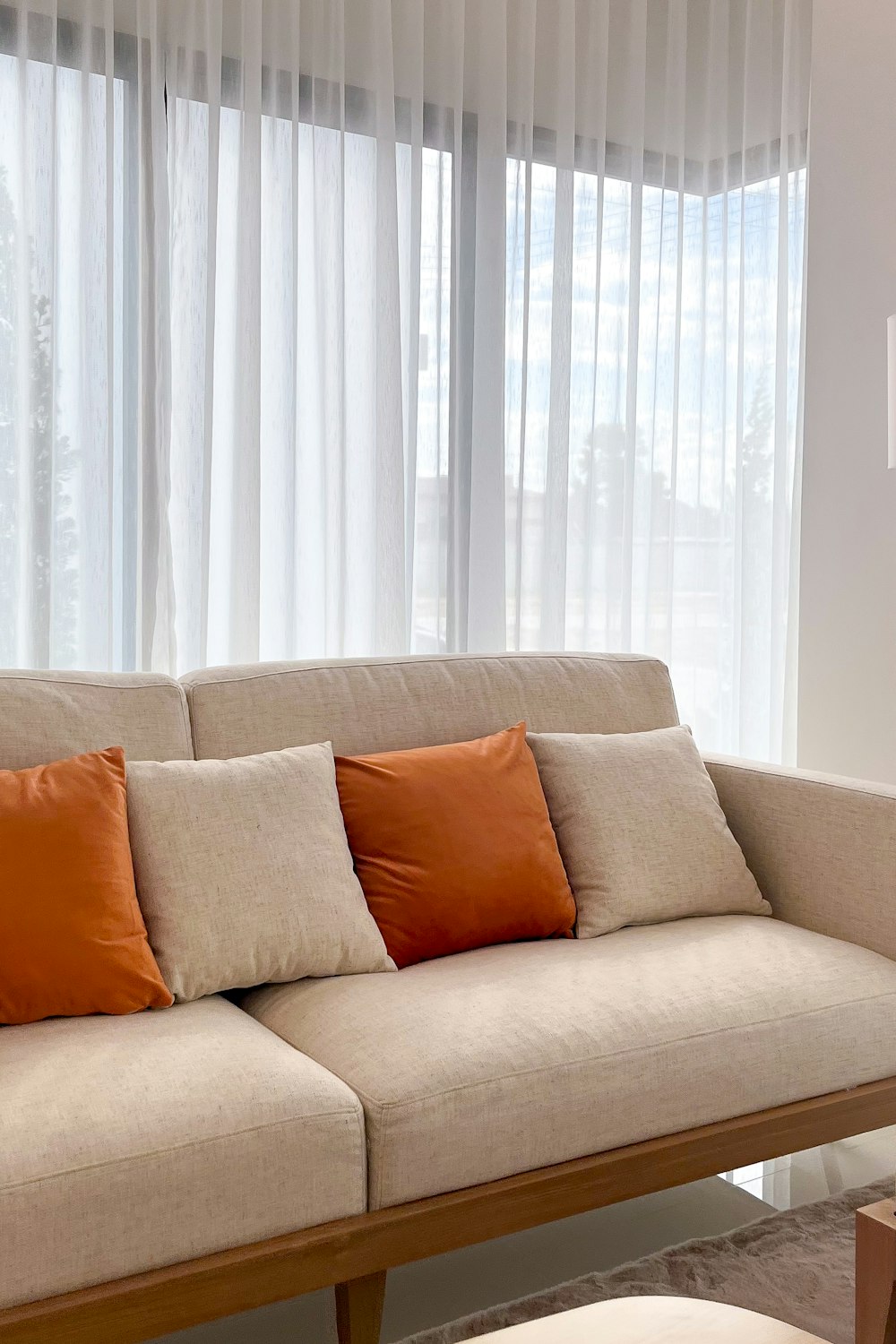
05Use sheers for daytime privacy
Sheer panels blur the view in from the street and still let daylight through. In a living room that faces neighbors, they let you keep the window uncovered by anything heavier all day.
06Layer sheers and curtains on a double rod
A double rod holds a sheer behind and a heavier panel in front. You get soft light by day and privacy or darkness at night, with only one set of brackets on the wall.
07Choose light fabric over heavy
Linen, cotton and linen-look polyester hang in slim folds and stack into a narrow bundle when open. Thick velvet and stiff blackout fabric take up several inches of wall on each side and feel heavy in a small room. If you need to block light for a TV, pick a lined curtain in a light color.
08Use a ceiling track
A track fixed to the ceiling hides the hardware and lets the fabric run from the very top of the wall. It suits low ceilings, bay windows and sliding doors, and it can run wall to wall so the curtains cover the whole end of the room.
09Pick a slim rod and simple rings
A rod about 1 inch thick with small end caps takes less attention than a thick pole with large finials. Rings or clips let the panels slide easily, which matters when you open and close them every day.
10Hold the curtains back
Tiebacks or holdbacks keep open panels tight to the wall and off the glass. On a narrow window, they can add several inches of clear pane.
11Try a tension rod or stick-on hooks if you rent
If you cannot drill, a tension rod inside the window frame holds light panels and sheers with no screws. Adhesive rod hooks hold a light rod above the frame. Both limit the weight you can hang, so pair them with sheers or unlined cotton.
Which length to order
Ready-made panels come in 63, 84, 96, 108 and 120 inches.
- 84 inches suits an 8-foot ceiling when the rod sits just above the frame.
- 96 inches suits an 8-foot ceiling when the rod sits near the ceiling.
- 108 inches suits a 9-foot ceiling.
Check what the length includes. Grommet and back-tab panels are measured from the top edge but hang about an inch below the top of the rod. Panels on rings hang an inch or two lower still.
What to avoid
- A rod mounted on the window frame itself.
- A single panel pushed to one side of a wide window.
- Dark, heavy curtains on a north-facing window.
- Busy large prints, which make the window wall feel closer.
Renters
Small screw holes for rod brackets are usually simple to fill when you leave, but check your lease first. Keep the original blinds in place behind the curtains if they belong to the landlord.
Curtains do the most when the rest of the room is sized to match: see small living room furniture ideas for the sofa and tables, and small living room rug ideas for the floor.