This post contains affiliate links. As an Amazon Associate I earn from qualifying purchases, at no extra cost to you. Details.
A small home office works when three things are right: the chair holds your back, the desk is at the right height and the screen is at eye level. Space matters less than those three. A corner of a bedroom with a good chair beats a spare room with a kitchen stool.
This guide starts with measurements, then goes through nine setups. Prices are those listed in the stores at the time of writing and change often.
Numbers to check before you buy
- Desk height. With elbows at 90 degrees and shoulders relaxed, the desk surface sits at about 28 to 30 inches for most adults. A height-adjustable desk removes the guesswork.
- Screen distance and height. Keep the screen an arm's length away (20 to 28 inches) with the top edge at or just below eye level.
- Space behind the chair. Leave at least 30 inches behind a desk chair so you can stand up and push back without hitting a wall.
- Legroom. About 24 inches of clear depth under the desk, and no drawers or crossbars where your knees go.
- Light. Place the desk at a right angle to the window, not facing it and not with your back to it, to avoid glare on the screen.
01Start with the chair
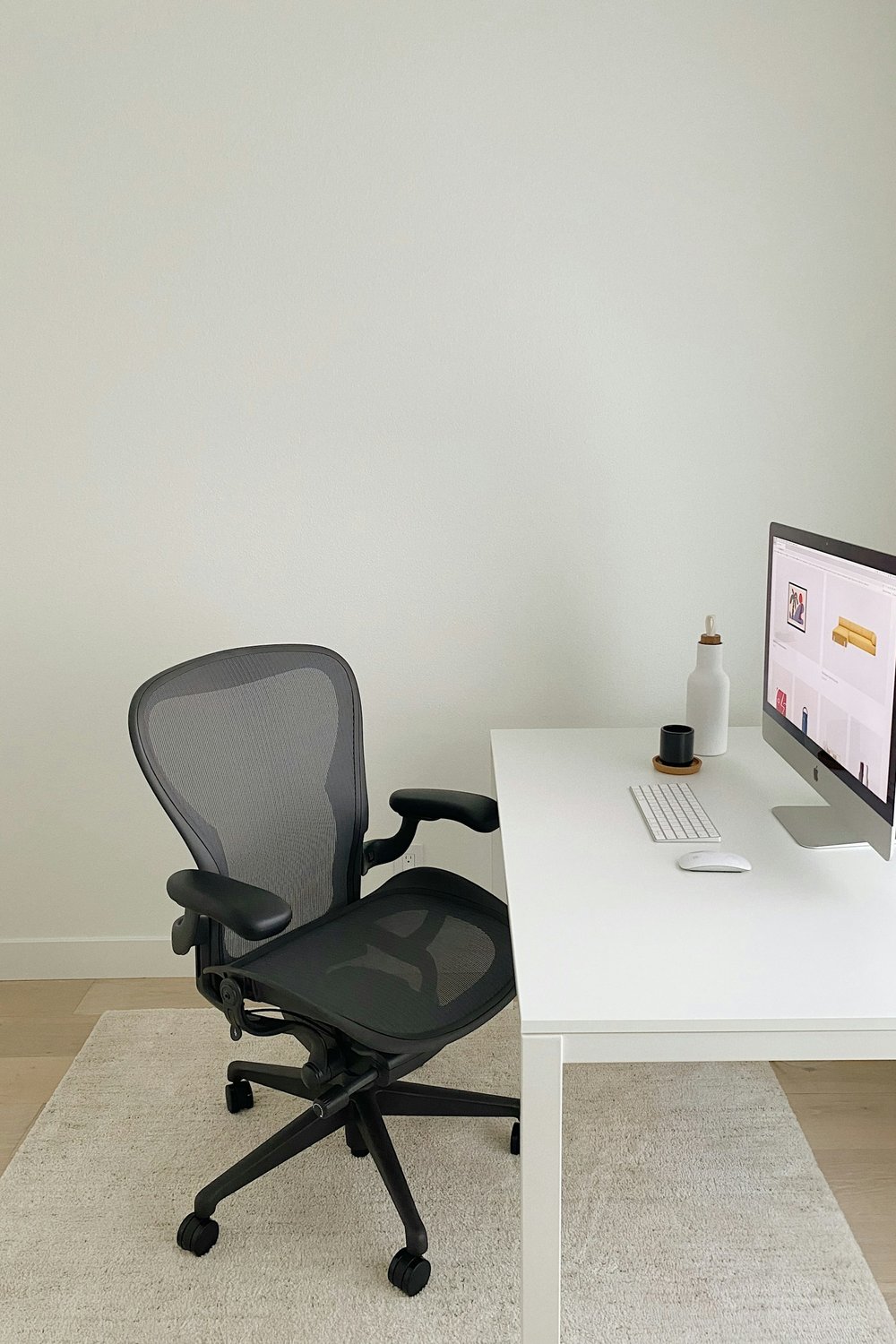
If you sit more than four hours a day, the chair is the one piece worth paying for. Look for adjustable seat height and depth, lumbar support that reaches the curve of your lower back, and armrests that move. Sunaofe sells a range from about $200 for a compact chair to about $450 for models with auto-tracking lumbar support, and it lists a 60-day home trial on its site, which helps with a purchase you cannot judge in a shop.
Compare ergonomic chairs at Sunaofe
02A standing desk in a corner
A sit-stand desk lets you change position during the day and works in a small room because it replaces a normal desk rather than adding to it. Check the width of the top against your wall: 47 to 55 inches fits most bedroom corners. A dual-motor frame lifts more weight with less wobble at standing height, and anti-collision sensors stop the top if it meets a shelf or a chair.
Lunar standing desk at Sunaofe
03Put the screen on an arm
A monitor arm clamps to the back edge of the desk and frees the whole surface under the screen. It also fixes height and distance in a few seconds, which is hard to do with a stack of books. Check that the arm supports your screen size and weight, and that the desk edge is thick enough for the clamp.
04A fold-away desk for a shared room
If the office has to disappear at six, a wall-mounted drop-leaf desk or a narrow console on slim legs does the job. Choose one at least 18 inches deep for a laptop and 24 inches for a monitor, and keep a stool or a slim chair that tucks fully under.
05Use a closet or alcove
A shallow closet with the doors removed holds a 24-inch-deep desk, a shelf above and a lamp. Close a curtain on it at the end of the day. Add a power strip inside the closet instead of running a cable across the room.
06A desk behind the sofa
In a studio, a narrow console behind the sofa separates work from living space without a wall. Keep it about 16 to 20 inches deep and use a chair with a compact base so it rolls out without hitting the sofa.
07Light the desk, not the room
One adjustable desk lamp at the side opposite your writing hand removes shadows and lets you leave the main light off in the evening. A warm bulb of 2700 to 3000 K is easier on the eyes late in the day. Avoid a bare light behind the screen.
08Hide the cables
Cables are what make a small office look messy. A cable tray under the desk, a few adhesive clips and a power strip mounted on the underside take about ten minutes. A standing desk needs enough slack for the full lift, so leave a loop and secure it to the frame.
09Add a rug and a plant
A rug under the chair takes the noise of rolling wheels, and a plant on a shelf or the corner of the desk makes the corner feel like a room. If the chair has hard casters on a hard floor, a flat low-pile rug or a chair mat protects the surface.
Which one first
Buy the chair first, then the desk, then the arm. Lighting, cable management and a rug are cheap, so add them last. Whatever you choose, sit in the setup for a week and adjust the height of the desk and screen before you decide it is wrong.
Related: small living room furniture ideas and small bedroom storage ideas.